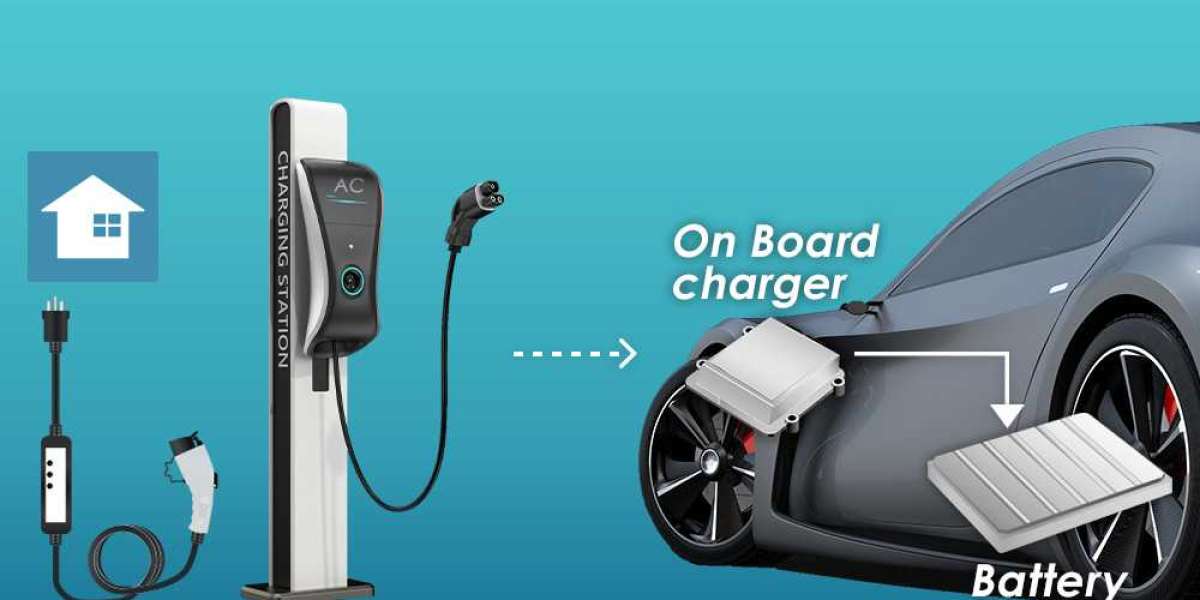

The global On-board Charger (OBC) Market is the invisible engine driving the mass adoption of electric mobility. As the critical link that converts AC power from the grid into DC power for the vehicle's battery, the OBC's evolution is directly tied to the "charging anxiety" of the modern consumer. Valued at US$ 5.7 Billion in 2024, the market is projected to reach US$ 29.3 Billion by 2035, expanding at a robust CAGR of 15.1% from 2025 to 2035.
As of early 2026, the market has moved past basic conversion. The focus has shifted toward high-voltage 800V architectures, the integration of wide-bandgap semiconductors (SiC/GaN), and the transformation of the vehicle into a mobile energy storage unit through bidirectional charging. The OBC is no longer just a component; it is becoming a sophisticated energy management hub.
Strategic Growth Drivers: The 15.1% Acceleration
The projected five-fold increase in market value is powered by three fundamental shifts in the automotive and energy landscapes:
- The Shift to High-Power AC Charging (11kW to 22kW)
In the early days of EVs, 3.3kW and 6.6kW chargers were the standard. However, as battery capacities swell to 100kWh and beyond, these legacy chargers take too long for modern lifestyles. By 2035, 11kW and 22kW OBCs will be the baseline for passenger cars and light commercial vehicles, drastically reducing home and workplace charging times and driving higher per-unit revenue for manufacturers.
- The Silicon Carbide (SiC) and Gallium Nitride (GaN) Revolution
Traditional silicon-based chargers are reaching their physical limits in terms of heat and size. The transition to Silicon Carbide (SiC) allows OBCs to be 30% smaller, lighter, and—most importantly—up to 98% efficient. This "miniaturization" is critical for OEMs (Original Equipment Manufacturers) looking to maximize cabin space and vehicle range without adding heavy hardware.
- Bidirectional Charging (V2X) as a Revenue Stream
The rise of V2G (Vehicle-to-Grid) and V2H (Vehicle-to-Home) technology is turning EVs into assets. By 2035, a significant portion of the $29.3 billion market will be comprised of bidirectional chargers. These allow owners to power their homes during outages or sell energy back to the grid during peak demand, effectively lowering the Total Cost of Ownership (TCO) for the vehicle.
Technological Frontiers: Integrated Power Electronics
The path to 2035 is defined by "The Great Integration." Instead of standalone boxes, we are seeing the rise of Integrated Charging Control Units (ICCU).
- Combined Architectures: Manufacturers like Hyundai Mobis and BorgWarner are integrating the OBC with the DC-DC converter (which powers low-voltage electronics like lights and infotainment). This reduces parts count, lowers weight, and streamlines the vehicle's thermal management system.
- 800V Readiness: As the industry moves toward 800V battery systems for "ultra-fast" DC charging, the OBC must adapt. Modern 800V OBCs are designed to handle higher voltages with less current, reducing the thickness (and cost) of internal wiring while increasing overall system efficiency.
- Wireless OBC Integration: While still in the early stages in 2026, the development of wireless (inductive) charging requires specialized OBCs capable of managing resonant power transfer. By 2035, high-end luxury EVs are expected to offer wireless charging as a standard convenience feature, creating a new high-margin sub-segment.
Regional Dynamics: The Global Pulse
Asia-Pacific: The Scale Giant
Asia-Pacific holds the lion's share of the market (over 60%), led by China’s massive EV manufacturing ecosystem. Companies like BYD and Delta Electronics benefit from vertical integration, producing both the chargers and the vehicles they go into. By 2035, APAC will continue to dominate volume, particularly as it exports low-cost, high-efficiency OBC solutions to emerging markets.
Europe: The Efficiency Pioneer
Europe is the primary driver for high-power 22kW charging due to the region's prevalent three-phase power infrastructure in homes and businesses. European Tier-1 suppliers like Valeo and Kostal are leading the way in bidirectional standards, ensuring that European EVs are "grid-ready" to support the continent's aggressive renewable energy targets.
North America: The Tech Hub
The North American market is surging due to the Inflation Reduction Act (IRA), which incentivizes local production of power electronics. The focus here is on "Heavy-Duty" electrification—OBCs for electric pickups (like the Ford F-150 Lightning) that require robust V2L (Vehicle-to-Load) capabilities to power tools and job sites.