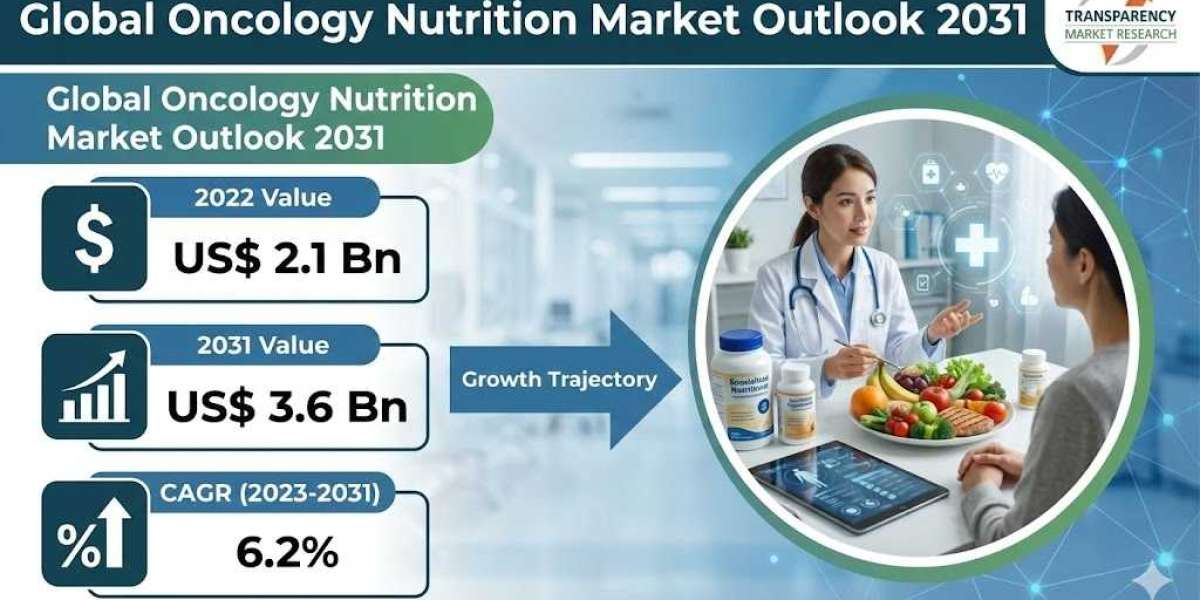

The global Oncology Nutrition Market is undergoing a fundamental shift: moving from "supportive care" to being recognized as a "frontline therapy." As medical consensus deepens regarding the link between nutritional status and treatment tolerance, specialized food and supplements have become essential components of the oncology care pathway. Valued at US$ 2.1 Billion in 2022, the market is projected to reach US$ 3.6 Billion by 2031, expanding at a CAGR of 6.2%.
As of 2026, the industry is defined by the "Personalization Pivot." Standardized shakes are being replaced by modular nutrition systems tailored to a patient's specific cancer type, treatment side effects (such as metallic taste or mouth sores), and unique metabolic needs detected through real-time biometric monitoring.
Strategic Growth Drivers: The 6.2% Momentum
The steady growth toward US$ 3.6 Billion is fueled by a more aggressive clinical approach to preventing "Cancer Cachexia" (muscle wasting):
- Combatting Treatment-Induced Malnutrition: In 2026, healthcare providers are prioritizing early intervention. Since up to 80% of cancer patients experience some form of malnutrition, oncology nutrition is now introduced at the point of diagnosis rather than when weight loss becomes critical.
- The Shift to Home-Based Oncology: More patients are receiving chemotherapy and targeted therapies in a home setting. This has created a massive demand for "retail-ready" and "easy-to-consume" medical nutrition products that do not require hospital supervision for administration.
- Specialized GI Focus: Gastrointestinal (GI) and head neck cancers remain the largest drivers of the segment. Because these cancers directly impact the ability to eat and absorb nutrients, they necessitate high-value enteral (tube feeding) and elemental formulas which carry higher price points than standard oral supplements.
Technological Frontier: The 2031 Roadmap
The next five years will be characterized by the integration of Microbiome Science and Digital Health:
- Microbiome-Guided Formulations: By 2026, "Precision Probiotics" are being integrated into oncology drinks. These are designed to replenish the gut flora damaged by chemotherapy, which in turn helps improve the efficacy of immunotherapy and reduces the severity of treatment side effects.
- Smart Palatability "Soothing" Formulas: Innovation in flavor science has led to products like Nestlé’s BOOST Soothe, designed specifically to provide a cooling effect for patients with oral mucositis. By 2031, we expect a surge in "taste-neutral" or "taste-correcting" additives that counteract the "chemo-mouth" effect.
- AI-Driven Nutrition Algorithms: New digital platforms (like the NACHO algorithm currently in trials) use AI to suggest daily dietary adjustments based on a patient's reported symptoms, energy levels, and blood markers, effectively providing a "Digital Dietitian" in the patient's pocket.
Regional Segment Insights
- North America (Dominant Share ~43%): The U.S. remains the largest market due to high healthcare spending and a robust clinical focus on supportive care. It is the primary testing ground for high-tech Parenteral (intravenous) nutrition innovations.
- Asia-Pacific (The Growth Engine): Driven by China and India, this region is seeing the fastest adoption rates. Government initiatives to improve cancer survival rates and the rapid expansion of private hospital networks are making specialized oncology nutrition accessible to millions of new patients.
- Protein Segment Leadership: Proteins remain the most critical nutrient segment, accounting for over 33% of the market. High-whey and plant-based protein blends are the "gold standard" for maintaining lean muscle mass during aggressive treatment cycles.
Conclusion: The Holistic Imperative
By 2031, the Oncology Nutrition Market will be a cornerstone of "Whole-Person" cancer care. The growth to US$ 3.6 Billion reflects a world where the survival of a patient is seen as a combination of surgical precision, pharmaceutical innovation, and metabolic resilience. The winners of 2031 will be the brands that can deliver "Medical Utility" with "Consumer-Level Flavor," ensuring that patients actually want to consume the nutrients they need to survive.