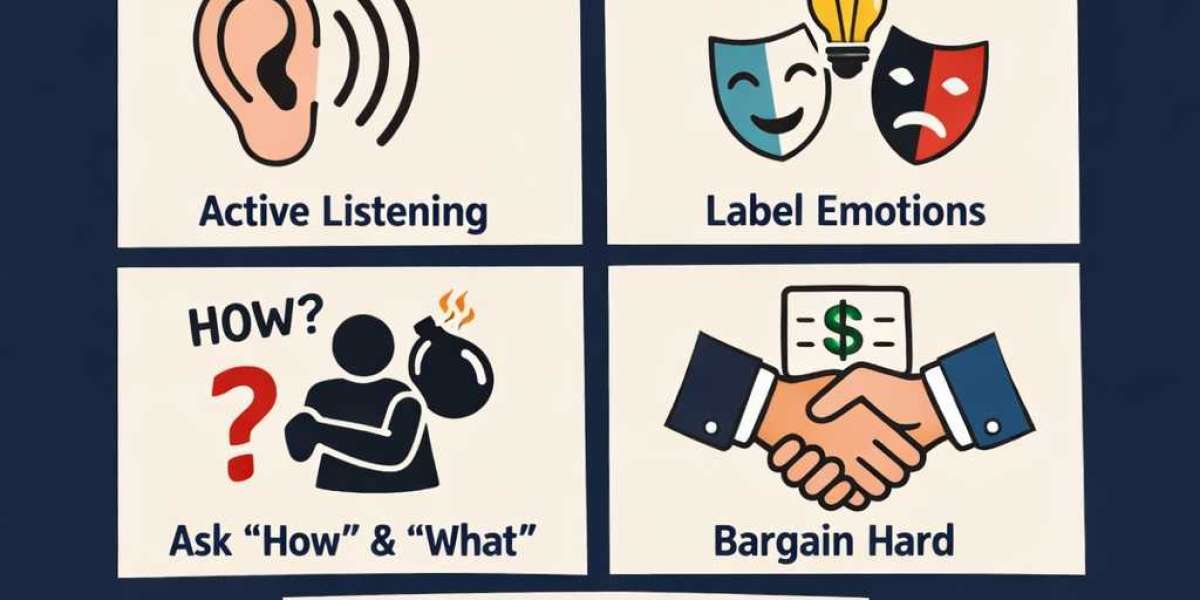

In business, partnerships, or salary discussions, the person who negotiates better usually wins better outcomes. That’s where Chris Voss negotiation techniques stand out. Developed by a former FBI hostage negotiator, these methods focus on psychology, empathy, and smart communication, not aggression.
If you want practical, real-world negotiation training that works in Switzerland’s competitive business environment, this guide will walk you through proven FBI tactics you can start using today.
Who Is Chris Voss and Why Do His Negotiation Methods Matter?
Chris Voss is a former lead international hostage negotiator for the FBI and author of Never Split the Difference. His techniques are now widely used in corporate negotiation training programs around the world.
Authoritative sources:
- Harvard Law School’s Program on Negotiation discusses tactical empathy and active listening as core negotiation principles.
- The FBI highlights communication and behavioral analysis as critical negotiation tools.
- Voss’s book Never Split the Difference (published by Harper Business) outlines his practical framework.
His approach works because it is rooted in behavioral psychology—not theory alone.
What Makes Chris Voss's Negotiation Different?
Traditional negotiation advice often focuses on compromise and logic. Chris Voss Negotiation is different because it emphasizes:
- Emotional intelligence
- Tactical empathy
- Calibrated questions
- Strategic silence
- Psychological triggers
Instead of trying to “win” through pressure, you guide the other party to willingly agree.
The Core Principles of Chris Voss Negotiation
- Tactical Empathy
Tactical empathy means understanding the other person’s feelings and perspective without necessarily agreeing.
How to apply it:
- Listen more than you speak
- Acknowledge their concerns
- Use phrases like
- “It seems like…”
- “It sounds like…”
This builds trust quickly, especially in Swiss business culture, where respect and clarity are highly valued.
- Mirroring
Mirroring is repeating the last 1–3 key words someone says.
Example:
Client: “The price feels a bit high.”
You: “A bit high?”
This simple technique encourages them to explain further.
- Labeling Emotions
Labeling means naming what the other person is feeling.
Examples:
- “It sounds like you’re worried about risk.”
- “It seems like timing is your main concern.”
According to negotiation research from Harvard’s Program on Negotiation, acknowledgment reduces defensiveness and improves outcomes.
- Calibrated Questions
Instead of asking “Why?”, which can feel confrontational, ask:
- “How can we make this work?”
- “What would need to happen for you to move forward?”
These questions shift problem-solving to the other party.
- The “No” Advantage
Chris Voss believes "no" is not rejection—it’s the start of negotiation.
People feel safer saying no than yes. So try:
- “Is this a bad time to talk?”
- “Would it be unreasonable to explore options?”
This lowers resistance and opens real discussion.
Step-by-Step: How to Apply Chris Voss Negotiation in Business
Here’s a practical framework you can use immediately.
Step 1: Prepare Emotionally
Before entering any negotiation:
- Identify your goals
- Define your minimum acceptable outcome
- Anticipate objections
- Prepare calibrated questions
Step 2: Start with Tactical Empathy
Open with curiosity, not demands.
Say:
- Help me understand your concerns.
- What challenges are you facing?
This establishes control through listening.
Step 3: Use Mirroring and Labeling
When they speak:
- Mirror key phrases
- Label emotional cues
This keeps them engaged and cooperative.
Step 4: Introduce Calibrated Questions
Guide them to solutions with:
- “How do you see this working?”
- “What would make this a good deal for you?”
Step 5: Aim for “That’s Right
Chris Voss emphasizes getting the other person to say That’s right, not “You’re right.
That’s right means they feel fully understood.
Chris Voss Negotiation vs Traditional Negotiation
Traditional Negotiation | Chris Voss Negotiation |
Focus on compromise | Focus on understanding |
Logical arguments | Emotional intelligence |
Win-lose mindset | Collaborative control |
Pressure tactics | Tactical empathy |
Split the difference | Never split the difference |
This approach is particularly effective in Switzerland, where negotiations often prioritize clarity, preparation, and relationship-building.
Why Negotiation Training Is Essential in Switzerland
Switzerland’s business culture values:
- Precision
- Preparation
- Professionalism
- Long-term relationships
Formal negotiation training can improve:
- Corporate deal-making
- Salary negotiations
- Supplier contracts
- Startup funding discussions
Companies increasingly invest in negotiation training programs to strengthen leadership and sales teams.
Real-World Applications of Chris Voss Negotiation
In Corporate Deals
Use calibrated questions to uncover hidden priorities.
In Salary Negotiations
Label concerns like
“It seems budget constraints are a concern.”
In Sales
Replace aggressive closing tactics with:
“How would you like to move forward?”
Psychological Triggers Used in Chris Voss Negotiation
- Loss aversion
- Autonomy control
- Emotional validation
- Fear reduction
- Strategic silence
These principles align with behavioral science research in modern negotiation theory.
Advanced Tactics for Professionals
If you want to elevate your negotiation training further:
Use the Accusation Audit
List all negative assumptions they may have about you and address them first.
Example:
“You might think our pricing is too high.”
This disarms objections early.
Use Strategic Silence
After asking a calibrated question, stay silent.
Silence encourages the other party to reveal more information.
Common Mistakes to Avoid
- Talking too much
- Trying to “win” aggressively
- Ignoring emotional signals
- Asking “Why?” repeatedly
- Accepting first offers too quickly
Negotiation is not about dominance—it’s about influence.
FAQs
- What is Chris Voss Negotiation?
Chris Voss Negotiation is a communication-based negotiation method developed by a former FBI hostage negotiator. It focuses on tactical empathy, mirroring, and calibrated questions to guide conversations toward better outcomes.
- Is negotiation training based on Chris Voss effective?
Yes. Negotiation training programs based on Chris Voss's techniques are widely used in corporate environments because they improve communication, emotional intelligence, and deal-closing success rates.
- How is Chris Voss's negotiation different from traditional methods?
Unlike traditional negotiation methods that emphasize compromise, Chris Voss Negotiation prioritizes emotional intelligence, psychological insight, and controlled dialogue to achieve stronger outcomes.
- Can these techniques work in Switzerland’s business culture?
Absolutely. Swiss business culture values preparation, respect, and clarity—qualities that align perfectly with Chris Voss's negotiation strategies.
Conclusion
Whether you're closing corporate contracts in Zurich, negotiating partnerships in Geneva, or discussing investments across Europe, mastering Chris Voss negotiation techniques gives you a powerful advantage.