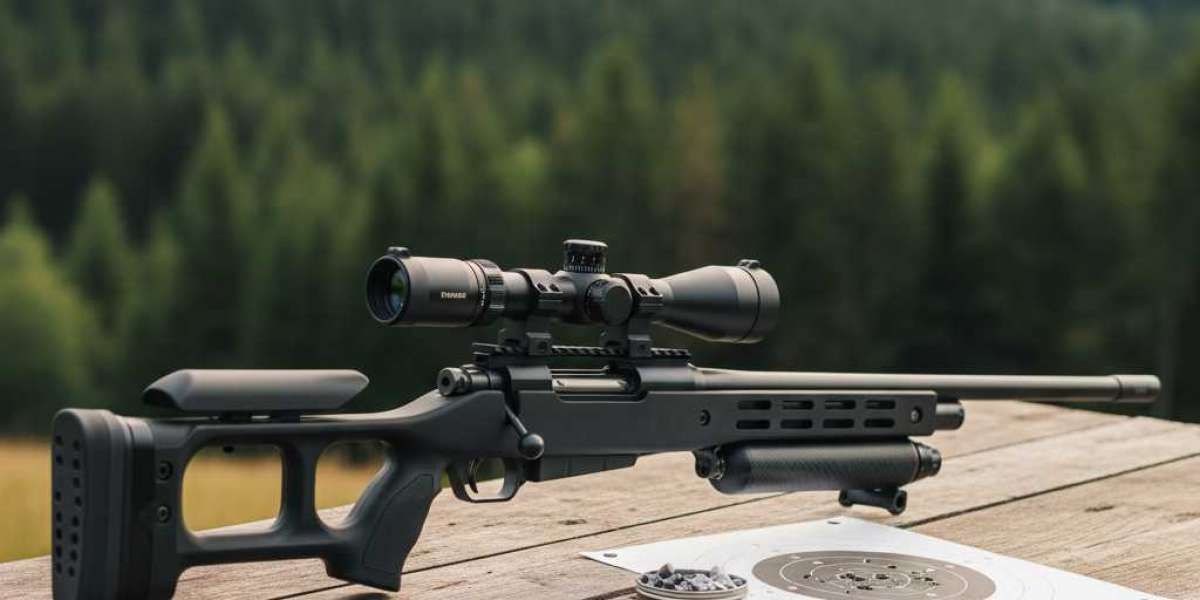

In the world of precision shooting, few technologies have seen as dramatic an evolution as the Pre-Charged Pneumatic (PCP) system. Once a niche category for elite competitive shooters, PCP air rifles have become the gold standard for enthusiasts ranging from backyard plinkers to serious pest control specialists. But owning a high-performance rifle is only half the battle; to truly unlock its potential, you must understand the marriage between the machine and its ammunition.
Whether you are looking to hit a bullseye at 50 meters or need the stopping power for small game, the synergy between a high-quality PCP air rifle and the correct pellet gun bullets is what separates the marksman from the amateur. In this guide, we dive deep into the mechanics, the ballistics, and the maintenance of modern airgunning.
What Makes a PCP Air Rifle Superior?
If you are transitioning from a traditional break-barrel or spring-piston airgun, the first thing you will notice about a PCP air rifle is the lack of "kick." Traditional springers rely on a heavy internal piston slamming forward to compress air, which creates significant recoil and vibration. This movement can throw off your aim before the pellet has even left the barrel.
The Power of Pre-Compressed Air
A PCP rifle operates on a much simpler, more refined principle. It features an onboard high-pressure reservoir—typically a steel or carbon-fiber cylinder—filled with compressed air to pressures between 2,900 and 4,500 PSI. When you pull the trigger, a valve opens for a fraction of a second, releasing a precise burst of air to propel the pellet.
+1
Key Advantages Include:
- Extreme Accuracy: With no moving heavy parts during the firing cycle, you can maintain your sight picture throughout the shot.
- Multi-Shot Magazines: Because there is no manual cocking of a spring required, most PCP rifles feature rotary magazines, allowing for rapid follow-up shots with just a flick of a side-lever.
- Regulated Consistency: High-end models include a "regulator," a device that ensures every shot receives the exact same air pressure, resulting in incredibly tight groupings.
Choosing the Right Ammunition: Pellet Gun Bullets Explained
You could have the most expensive rifle in the world, but if you feed it low-quality ammunition, your accuracy will suffer. Modern pellet gun bullets come in various shapes, weights, and calibers, each designed for a specific purpose.
1. The Versatile Domed Pellet
Also known as "Round Nose" pellets, these are the bread and butter of the PCP world. Their aerodynamic shape allows them to cut through the air with minimal drag, maintaining velocity and stability over long distances. If you are unsure where to start, a high-quality 4.5mm (.177) or 5.5mm (.22) domed pellet is almost always the best choice for general target shooting.
2. Wadcutters for Paper Targets
Characterized by a completely flat head, wadcutters are designed to punch perfectly clean, circular holes in paper targets. This makes scoring much easier. However, due to their poor aerodynamics, they lose energy rapidly and are best suited for short-range indoor competitions.
3. Hollow Points and Slugs for Impact
For pest control, energy transfer is the priority. Hollow-point pellets are designed to expand upon impact, creating a larger wound channel and ensuring a clean, ethical kill. For high-powered PCP rifles, "slugs" have recently become popular. Unlike traditional skirted pellets, slugs are shaped like real bullets, offering a much higher ballistic coefficient for extreme long-range shooting.
+1
Matching Caliber to Purpose
In 2026, the three primary calibers dominate the market, each offering a different balance of speed and power.
Caliber | Best Used For | Characteristics |
4.5mm (.177) | Competitive Target Shooting | Fastest velocity, flattest trajectory, and lowest cost. |
5.5mm (.22) | General Purpose Small Game | The "goldilocks" caliber; balances accuracy with knockdown power. |
6.35mm (.25) | Heavy Pest Control | Massive impact energy, less affected by wind, but uses more air. |
Maintenance and Longevity
While PCP rifles are incredibly reliable, they are sophisticated machines that require specific care. Unlike springers, PCPs are filled with O-rings and seals that keep the high-pressure air contained.
Air Quality and Seals
Always use clean, dry air. Moisture is the enemy of a PCP rifle, as it can cause internal corrosion. If you are using a hand pump, ensure it has a moisture trap. Additionally, a light application of silicone oil (never petroleum-based oil) on the external seals and the side-lever mechanism will keep the rifle cycling smoothly for years.
Barrel Cleaning
Lead buildup can eventually affect your rifling. Use a pull-through cleaning kit with soft patches rather than aggressive wire brushes. Many PCP shooters find that their rifles have a "sweet spot"—a certain level of lead fouling where accuracy is peak—so don't over-clean your barrel unless you notice your groups starting to open up.
Conclusion
The shift toward PCP technology has redefined what we expect from an airgun. By combining the surgical precision of a regulated air system with the advanced ballistics of modern pellets, shooters can now achieve results that were once reserved for rimfire firearms. Whether you are a competitive athlete or a hobbyist, investing in a quality PCP air rifle and matching it with the perfect pellet gun bullets is the most effective way to elevate your shooting experience.
Frequently Asked Questions (FAQ)
1. How many shots can I get from a single fill?
This depends entirely on the size of the air tank and the power setting of the rifle. A standard 4.5mm target rifle might get 100+ shots per fill, while a high-power "Big Bore" rifle might only get 10 to 20 shots before needing a top-up.
2. Can I use a standard tire pump to fill my PCP rifle?
Absolutely not. A car tire pump only reaches about 35–40 PSI, whereas a PCP rifle requires upwards of 3,000 PSI. You must use a specialized high-pressure hand pump, a carbon-fiber scuba tank, or a dedicated airgun compressor.
+1
3. Why are my pellets "spiraling" in the air?
Spiraling usually happens when a pellet is driven faster than its aerodynamic design allows (often exceeding the speed of sound, ~1,100 FPS), or if the pellet weight is too light for the rifle's power. Switching to a heavier domed pellet or a slug often solves this issue.
4. Is it safe to leave my PCP rifle pressurized?
Yes. In fact, it is recommended to keep some pressure in the tank (usually around 50–100 BAR) to keep the seals seated and prevent moisture from entering the system. Never store your rifle completely empty for long periods.
5. Do I need a license for a PCP air rifle in South Africa?
Under current 2026 regulations, air rifles with a caliber of 5.5mm (.22) or smaller generally do not require a license, provided they do not exceed certain power limits defined by the Firearms Control Act. However, any airgun with a caliber larger than 5.5mm is often classified as a firearm and requires licensing. Always verify with your local DFO (Designated Firearms Officer).
+1
6. What is the difference between a pellet and a slug?
A pellet has a "waist" and a hollow skirt that flares out to catch air, making it stable at subsonic speeds. A slug is a solid, bullet-shaped projectile with more weight and better aerodynamics, designed for high-power rifles to maintain accuracy at distances beyond 100 meters.
+1